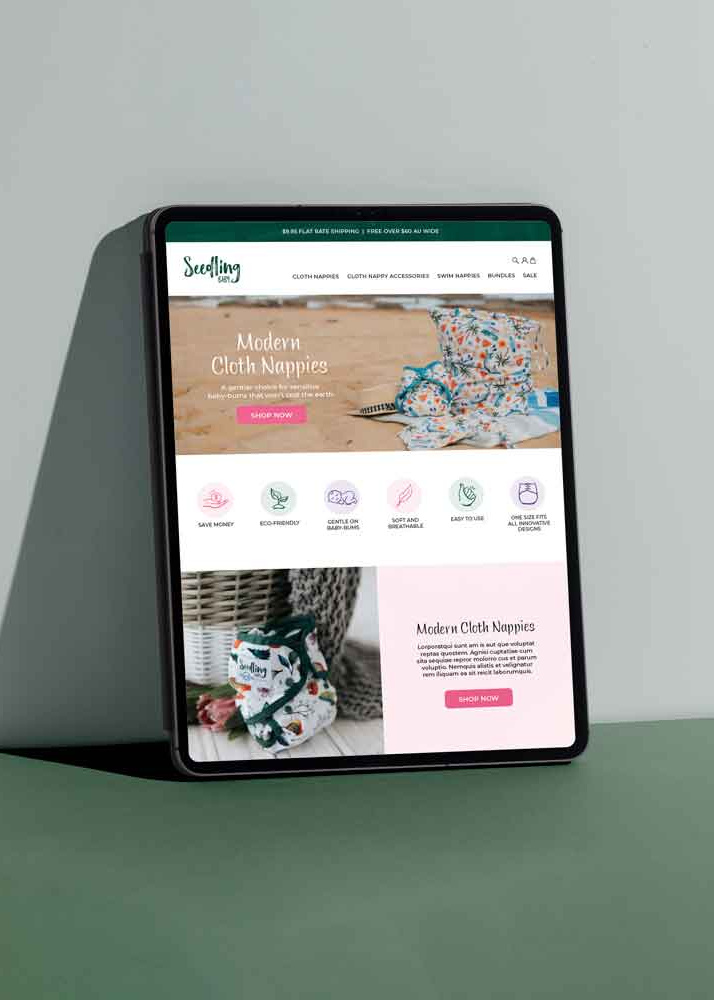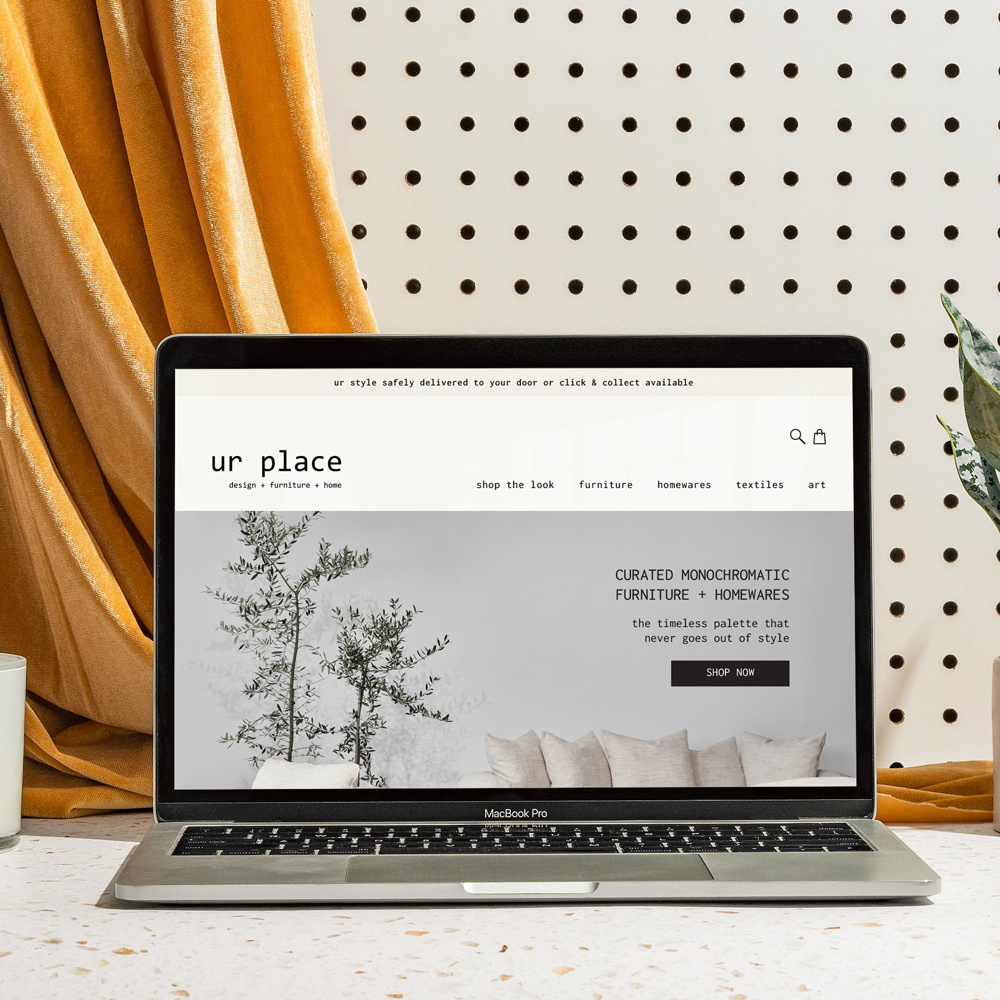
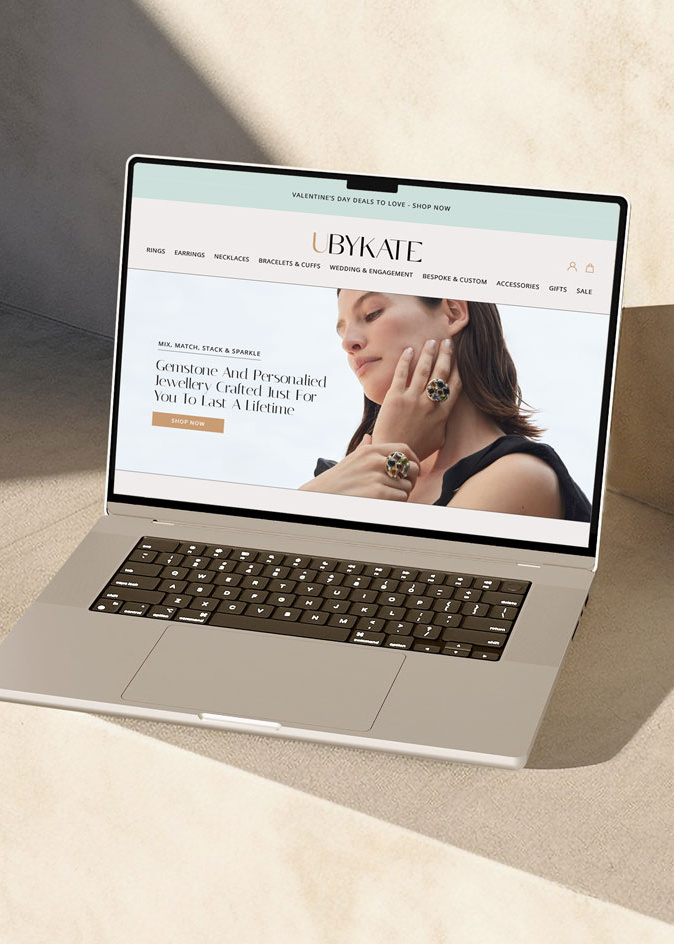
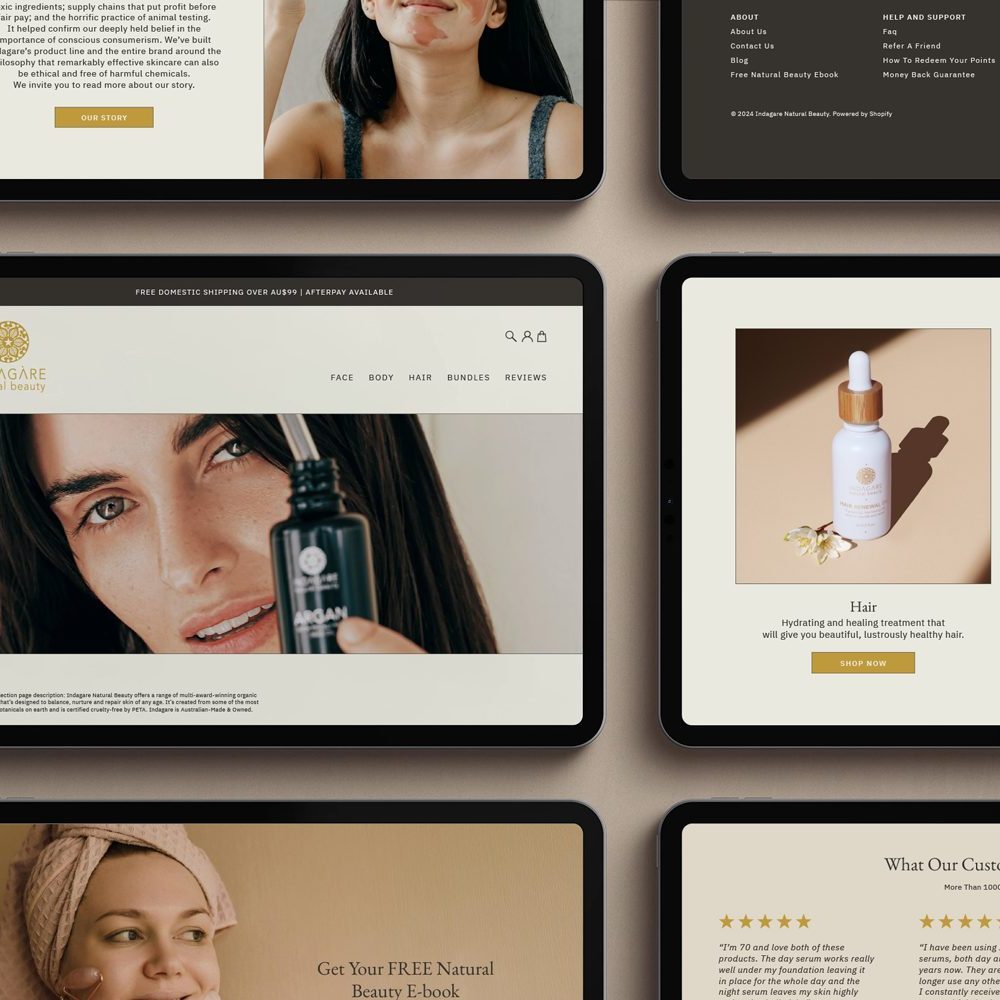
SHOPIFY WEB DESIGN

Shopify web design for premium eCommerce brands.

Considered design and conversion strategy, built around the buyers your brand actually wants to reach.

Most Shopify stores are built from generic theme templates with predictable layouts, predictable conversion logic, and predictable brand voice. Fine for volume retail. Wrong for premium brands trying to stand out from buyers who’ve seen those same templates a thousand times.

We design Shopify storefronts that reflect your brand’s distinctiveness, structure conversion around premium-buyer behaviour, and integrate with the broader marketing system that has to make them work. Our focus stays on the design and conversion strategy that actually moves your numbers.

Shopify web design for premium brands

Who Shopify web design works for.

We design for premium eCommerce brands. Founders building distinctive brands with a real point of view – not stores trying to compete on volume, discount, or generic category positioning. The work fits best when:

You’re building (or rebuilding) a premium brand presence. Either launching a new Shopify storefront or refreshing one that’s no longer reflecting where the brand is now.

Your existing site is converting below what your brand is worth. Templated theme, generic conversion logic, brand voice that drifts from the rest of your marketing. The site works at a basic level but isn’t doing the trust and conversion work a premium brand needs.

You have or are planning a development partner. We work with your existing developer or recommend one of our trusted partners to handle the build itself. We focus on the design and conversion strategy.

You want design integrated with your broader marketing strategy. If the website is a one-off project disconnected from your acquisition and retention work, you’ll get more value from a generalist design agency. We work best when the website design is informed by the same strategic thinking driving your Meta, Google, email, and SEO.


Premium-brand Shopify design isn't generic Shopify design.

Most Shopify stores follow the same template logic. Hero banner, three-column features, product grid, generic FAQ, footer. The buyer can predict the next page before it loads.

Premium brands need design that doesn’t follow that template. The decisions we make differently:

PM-Icon-8
long-arrow-hi

Design built around your brand, not the theme’s defaults.

We design from your brand identity outward – not from the theme’s preset layout inward. Type, colour, imagery, motion, and information architecture all serve your brand voice rather than the theme’s expectations.

the burning-budget version
long-arrow

Conversion logic built around premium-buyer behaviour.

Premium buyers research more, compare more, and validate more before they buy. Product pages, collection pages, and the broader site architecture are designed around how those buyers actually shop – not the impulse-buy logic underlying most Shopify themes.

PM-Icon-9
long-arrow

Trust signals where premium buyers look for them.

Reviews, certifications, brand story, founder presence, ethical credentials, sustainability claims, press mentions. We design with these as integrated parts of the page hierarchy, not afterthoughts.

PM-Icon-5
long-arrow

Mobile-native, not mobile-adapted.

Premium buyers are increasingly mobile-first, particularly for the considered-purchase research phase. The site is designed mobile-up rather than desktop-down – which is the opposite of how most Shopify themes work.

Integration with the rest of your marketing system.

The product pages reflect what your Meta ads are saying. The collection page logic reflects how your customer intelligence says buyers actually browse. The email capture flows align with your Klaviyo strategy.

Nothing on the site is designed in isolation.

Design and conversion.

We focus on design and conversion strategy because that’s where the real value of premium-brand Shopify work happens. The build execution – theme development, app integration, infrastructure migration – is genuinely time-intensive technical work that’s usually better delivered by specialist development partners.

Three ways this typically works in practice:

You have an existing development partner. We design the storefront and provide complete build-ready files, specs, and conversion logic. Your developer executes the build. We stay involved through to launch to ensure the design and conversion thinking is preserved through implementation.

You need a development partner. We recommend one of our trusted Shopify development partners – agencies and freelancers we’ve worked with before whose technical work we trust. We brief them, hand off the design, and stay involved through launch.

Complex projects where you want one team end-to-end. For larger or more strategically complex projects – platform migrations, custom integrations, multi-region rollouts – we can manage the build ourselves rather than handing it to a partner.

Brands choose this route when they want a single team with strategic oversight across both the design and the technical execution. We’re selective about which projects we take on this way, because the work is genuinely time-intensive and we’d rather do a few of them well than spread thin.

This split keeps our focus on the work that actually moves your numbers – the strategic and design decisions that determine whether the site converts. And it gives you a clear path forward whether you have a development partner, need one, or want us to manage the whole thing for a project that genuinely warrants it.

Shopify design and conversion for premium ecommerce brands

Premium brands we've helped grow.

How it works.

01 · Discovery and audit

We start by understanding your brand, your buyers, your existing site (if there is one), and the strategic context the new design has to fit into. This is the foundation everything else builds on.

02 · Strategy and conversion architecture

Before any visual design happens, we map out the conversion logic – page architecture, key user journeys, trust signals, and integration points with the rest of your marketing.

03 · Design

Visual design phase. Brand-led design across home, collection, product, cart, account, and any custom pages your brand needs. Mobile-first throughout.

04 · Handoff to development

Depending on the project, this stage either hands the design over to your developer (or one of our trusted partners) for execution, or moves directly into our own development phase if we’re building it. Either way, we stay involved through to launch to ensure design and conversion integrity is preserved through implementation.

05 · Launch and post-launch

Pre-launch QA, soft-launch testing, and post-launch monitoring of conversion data. The design isn’t finished at launch – we monitor early performance and recommend refinements based on actual buyer behaviour.

Questions premium brand founders ask.

How long does a Shopify design project take?

Typically 8–16 weeks from kickoff to launch, depending on the size of the site, the complexity of integrations, and the development partner’s capacity. We’ll give you a realistic timeline in your strategy session.

Usually just the design and conversion strategy – we work alongside trusted Shopify development partners (either your existing developer or one we recommend) for the build itself. For larger or more strategically complex projects – platform migrations, custom integrations, multi-region rollouts – we can manage the build ourselves. We’ll talk through which path fits your project in your strategy session.

For complex projects where having a single team with strategic oversight across both design and technical execution genuinely matters. Platform migrations, custom integrations, brands rolling out across multiple regions, or projects where the build complexity sits close enough to the conversion strategy that splitting them across two teams would create friction. We’re selective about which projects we take on this way, because the work is time-intensive and we’d rather do a few of them well than stretch thin.

Yes – we regularly do design refreshes that work within an existing theme structure rather than requiring a full ground-up rebuild. This is the most cost-effective path for brands whose current site has good infrastructure but needs visual and conversion-strategy work.

Predominantly Shopify, occasionally Shopify Plus. We don’t work in WooCommerce, BigCommerce, or other platforms.

Project-scoped depending on the size of the site, the complexity of the brand work, and the integration requirements. We’ll quote in your strategy session.

Ready for a Shopify storefront that actually reflects your brand?

YOUR TURN

Ready for a Shopify storefront that actually reflects your brand?

Book a growth strategy session. We’ll talk through where your brand is now, what your existing site is (or isn’t) doing for you, and whether a Shopify design project is the right move.

About Productpreneur Marketing.

Productpreneur Marketing is a senior eCommerce marketing strategy agency working exclusively with premium brands across Australia, New Zealand, and (occasionally) further afield. Our average client stays with us over two years – not because they’re locked in, but because the work continues to compound.

We work in three tiers. Self-paced Growth Playbooks for founders who want to do the strategic work themselves. Hire a Strategist engagements for brands ready for senior strategic leadership directing their existing team. And full Brand Growth Partnerships for premium brands ready to hand the entire marketing engine to a specialist team.

Our founder, Catherine Langman, brings two decades of digital marketing experience – including senior work with Microsoft, Coca-Cola, Blackmores, and RMK Shoes – plus a decade as a premium eCommerce founder herself, having launched, scaled, and sold an award-winning international brand. That dual lens – marketing strategist and eCommerce operator – is what shapes how every member of our team thinks about your business.

We don’t just run campaigns. We build growth systems – designed specifically for premium buyer psychology, not generic platform best practices.